Fly Fishing in the Limay River
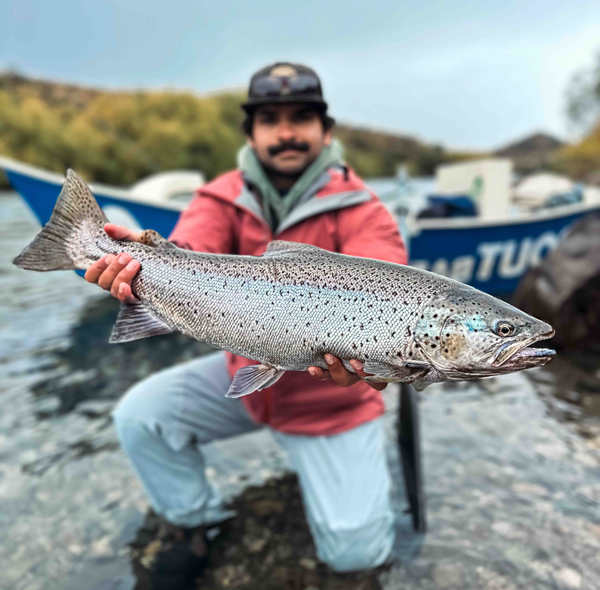
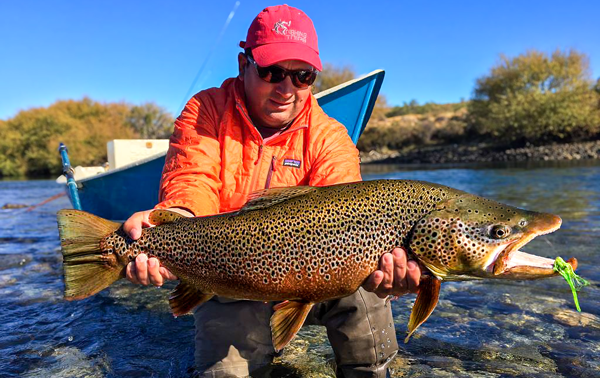
“The Limay River is where I caught the biggest trout of my life, and I want to return every season to find its older sister.”
Fly Fishing Guide in Bariloche, Limay River, and the best advice from Emanuel Medina: A Complete Fisherman's Guide
List of Topics, Click Here!
- Fly Fishing on the Limay River: Biggest Brown Trout in Bariloche, Patagonia
- Unique Characteristics of the Limay River and its Ecosystem
- What are the Best Seasons for Fly Fishing on the Limay River?
- Effective Techniques and Recommended Flies for the Limay River
- Exploring the Four Sections of the Limay River
- Over the Limay River Basin and Nahuel Huapi National Park
- Villa Llanquín on the Banks of the Limay River
- We Invite you to Explore the Limay River with us; it Needs to be on your Fly-Fishing Bucket List!
Fly Fishing on the Limay River: Biggest Brown Trout in Bariloche, Patagonia
The Limay River originates at the mouth of Lake Nahuel Huapi in Bariloche and begins its long journey to the Atlantic Ocean in one of the world’s best trout fishing destinations. The river’s mouth is a popular spot for anglers, so we highly recommend that visitors, both intermediate and advanced, hire a guide for a raft trip. This will allow you to enjoy learning, experience fly fishing in Argentina in a friendly and fun way, and increase your chances of success in these renowned waters.
In the upper reaches of the Limay, where the river originates, there are two or three beautiful long stretches ideal for drift fishing. In all of them, there is always a chance of finding trophy trout. Our specialized boats are designed specifically for this river: high-profile, highly buoyant, and built to withstand the wind while securely holding your equipment. With these boats, you will have many more opportunities to get close to the famous trophy trout, as our guides are trained and know the places where the big trout move and hide each year.
The Limay River trout behaves very similarly to salmon. It spends much of the year swimming in the vast, deep waters of Lake Nahuel Huapi, which it considers a giant ocean. These lakes teem with local baitfish, such as puyén and perch, and even crustaceans like the famous amastacus, which can reach 10 centimeters in length. This abundance of food is what makes the trout so large and healthy. Although rare, trout weighing 14 or 15 kilograms have been documented in the lake. Our personal record for the largest trout caught by one of our clients is 9 kilograms.
When the water temperature of Lake Nahuel Huapi drops, and the spawning instinct takes over, these trout begin their migration toward the river’s mouth. By the time they reach the mouth, they are at their physical peak: robust, muscular, and ready for the challenge ahead.
Even if you’re a beginner, we provide all the necessary tools and guidance to ensure you have the same experience. One of our guests caught a huge trout on the first day of their trip using one of our boats, an 8-pound rod recommended by our guide, a fly tied by our team, and 300-grain line. This is the equipment we recommend for those fishing the Limay River, and it has proven highly effective in helping our clients catch trophy trout in Bariloche.
We also offer advice on the best flies. You can consult our fly list, ask us how to tie more, and we’ll help you create an excellent collection for your trip. With the right guidance, equipment, and river knowledge, even novice anglers can experience the thrill of catching some of the largest and healthiest brown trout in Bariloche, Patagonia, Argentina.
The Limay River is not just about fishing; it’s also about understanding the water’s rhythm, trout behavior, and the incredible ecosystem of Lake Nahuel Huapi. Navigating these waters with an expert guide ensures a safer, more enjoyable, and ultimately more successful experience. From the bounty of the lake to the challenging river currents, every cast is an opportunity to connect with nature and pursue a trophy trout that few anglers will forget. This is what makes the Limay River a must-see destination for anyone looking to enjoy the best fly fishing in Bariloche.
To plan your next Patagonian adventure in Bariloche, visit:
Unique Characteristics of the Limay River and its Ecosystem
Here we’ll talk about the abundant ecosystem surrounding the Limay River in Bariloche: a unique natural environment shaped by geography, climate, and biodiversity.
The Limay River originates in Lake Nahuel Huapi and flows through a protected natural area of approximately 50,000 hectares until its confluence with the Traful River. This region, located near Villa Llanquín and close to Bariloche, was created to preserve both the landscape and the river’s ecosystem. Exploring this area, I realized that you don’t just fish here; you immerse yourself in a carefully preserved natural corridor.
One of the most striking features of the Limay is its landscape. The river flows through a deeply carved valley, surrounded by rock formations sculpted by erosion, especially in areas like the Enchanted Valley. In my opinion, these formations are not only visually stunning but also essential for creating ideal habitats for fish like trout, with meanders, deep pools, and rapids that define the fishing conditions.
The river itself is classified as oligotrophic, meaning its waters are extremely clear and low in nutrients. In my experience, this translates into more selective fishing and a more technical style, where presentation and adaptation are key. The region’s climate also plays a significant role, as it lies in a transition zone between the humid Andes and the arid Patagonian steppe. I observed how the wind, light, and temperature constantly influence fish behavior and insect activity.
As for species, the Limay is known for its trout populations, including rainbow, brown, and brook trout, as well as freshwater Atlantic salmon. Rainbow and brown trout are the most common and are notable for their size and strength. However, what many anglers overlook is the presence of native species such as the Patagonian silverside and perch, which are part of a more complex ecological balance. Understanding this changed my approach to fishing here: it stopped being about catching fish and became more about understanding the ecosystem.
Fishing techniques vary depending on the conditions. Dry fly fishing can be very effective during insect hatches, while nymphing works well in deeper currents, and streamers are ideal for targeting larger trout. Most anglers use drift boats to cover more ground and access remote areas, although wading is possible in some sections.
The fishing season typically runs from November to May, with advantages throughout the year. Spring offers more active fish, summer provides stable conditions, and autumn is ideal for targeting larger trout. Personally, I found the end of the season particularly rewarding due to the increased fish activity.
This is also why conservation is paramount. This area has been protected since 1996, and its conservation depends on responsible practices, such as catch-and-release and compliance with local regulations. Fishing here comes with the responsibility of preserving what makes this place unique.
If you plan to fish on the Limay River, my advice is simple: be flexible, pay attention to your surroundings, and take the time to understand the ecosystem. In my experience, the most successful anglers are those who understand the river as a whole—not just the water, but everything that surrounds it.
What are the Best Seasons for Fly Fishing on the Limay River?
Understanding the best fly-fishing seasons on the Limay River is key to planning a successful trip to Patagonia. The river offers excellent fishing opportunities from November to May, but each season provides a completely different experience in terms of fish behavior, water conditions, and overall results.
–Spring (November to December) is considered one of the most exciting times to fish the Limay River. As water temperatures rise after winter, trout become much more active and aggressive. During this period, both brown and rainbow trout feed intensely, making it an ideal time for anglers seeking frequent bites and fast-paced fishing. Dry fly fishing can be especially productive thanks to the increased insect activity, and overall, this season is perfect if your priority is action rather than the size of your catches.
–Summer (January to February) offers the greatest stability and predictability of the entire fishing season. Water levels stabilize, weather conditions become more consistent, and insect hatches occur regularly. This makes summer the safest option for anglers seeking reliable fishing conditions with few variables. While the fish aren’t always as aggressive as in spring, the constant opportunities throughout the day, especially at dawn and dusk, make this season very enjoyable. It’s also an excellent time for less experienced anglers due to its forgiving nature.
–However, autumn (March to May) stands out as the best season for those seeking larger trout. As spawning season approaches, the fish, particularly brown trout, become more territorial and aggressive. This change in behavior increases the chances of landing trophy specimens. Furthermore, fishing pressure tends to decrease toward the end of the season, creating a calmer environment conducive to strategic fishing. In my personal experience, the final stretch of the season proved especially rewarding, with noticeably higher fish activity and more memorable catches. This combination of larger fish and fewer anglers makes autumn one of the most attractive times to fish the Limay River.
Ultimately, the answer to the question of the best seasons for fly fishing on the Limay River depends on your goals. If you’re looking for plenty of action and frequent bites, spring is ideal. If you prefer stable and predictable conditions, summer is your best option. But if your goal is to catch larger trout and enjoy a more intense and rewarding experience, autumn—especially the end of the season—offers the greatest potential.
In conclusion, the Limay River isn’t defined by a single «best» season, but rather by how each period suits your expectations. Understanding these seasonal differences allows you to choose the perfect time and make the most of one of Bariloche’s most iconic fly-fishing destinations.
Effective Techniques and Recommended Flies for the Limay River
Our family’s fly fishing experience in Bariloche spans three generations!
For anglers dreaming of fly fishing in Bariloche, the Limay River always tops the list. For three generations, our family has dedicated countless hours to learning its secrets, perfecting techniques, and understanding which flies perform best in different conditions. This accumulated knowledge allows us to share a realistic and highly effective approach to fly fishing on the Limay River with visiting anglers.
The most common mistake a beginner angler makes on the Limay River is arriving with large flies and simply casting them into the middle of the river, expecting results. This rarely works. Over decades of experience, we’ve learned that many trout enter the river during spawning season and that the middle of the river isn’t where they feed. The most productive spots are the rapids, along the banks, under trees, and even near or under logs. If you see fish floating in the river, it doesn’t mean you should cast your line there. Instead, you need to completely change your approach: long casts with casting lines or Spey lines, and precise positioning. Anchoring near the trout is difficult and not recommended; wading from the bank is usually the best way to reach feeding trout.
We teach most of the anglers who visit us a method that balances ease and effectiveness. While paddling, we focus on the shallow rapids, near trees and alongside rocks or logs—places where some trout are still actively feeding. Among the ten trout at these spots, one might be hungry while the others are deep in the pools, almost inaccessible. This approach gives beginners a realistic chance to catch fish on their first outings. Local guides or anglers with decades of experience, like ourselves, can choose between this strategy and more advanced techniques depending on the situation and the season.
The Limay River changes character throughout the season, demanding flexibility and precision from those who fish it. At the beginning of the season, large migratory trout arrive from Lake Nahuel Huapi, and streamer-type artificial flies are usually the most effective choice. Cast through the current, let the fly drift deep, and prepare for the strike of a fish that can deplete your line in seconds. As summer progresses and the river calms, dry fly fishing becomes an exciting option. The hatching of mayflies, caddisflies, and stoneflies draws trout to the surface, and precise presentations are rewarded with explosive strikes. For three generations, we have perfected the balance between long casts and delicate drifts—crucial techniques in the crystal-clear waters of the Limay River.
Nymph fishing is another technique that has proven effective, especially in deeper stretches and when the trout are less active on the surface. Weighted nymphs and trailing lures allow you to reach the right depth, and the subtle strikes require a very precise sense of timing. We understand that the difference often lies not only in the fly itself but also in correctly reading the water, identifying the currents, and letting yourself be carried along by them naturally. These are the skills we pass on to every angler who joins us on the river.
Streamer fishing remains the essence of the Limay River. Large, articulated flies, woolly buggers, and zonkers are indispensable in any tackle box. When fishing with sinking lines, you can trigger aggressive strikes from the river’s largest trout. Over the decades, we’ve seen how subtle adjustments—the retrieve speed, the angle of the movement, or the choice of color based on light and water clarity—can make the difference between an ordinary day and a legendary one.
Some of my Favourite flies for the Limay river:
Clouser Minnow – White/Olive (#6–#10)
Very effective in fast currents and deep pools.
Its design allows for precise and long casts.
Imitates small fish that trout chase in the riffles and pools of the Limay River.
EP Streamer – Black/Olive (#8–#12)
Thin, flexible body that creates natural movement in clear water.
Perfect for targeting trout hiding under logs and rocks.
Ideal for presenting the streamer in hard-to-reach spots along the shore or while floating the river.
Lefty’s Deceiver – Natural/Brown (#6–#10)
Moves naturally in fast currents and low riffle areas.
Excellent for catching large trout that feed on small fish.
Works very well in different river conditions and active current
For us, fishing on the Limay River isn’t just about catching trout; it’s about keeping a tradition alive. Our grandfather taught us the first casts in its currents, our parents expanded our knowledge of its pools and insect hatches, and today we continue to refine those techniques while guiding anglers from all over the world. Each generation has contributed its perspective, but the essence remains intact: respect for the river, patience, and a passion for fly fishing.
The Limay River is more than just a fishing spot; it’s a place where history, tradition, and adventure converge. For three generations, it has shaped our way of fishing and our way of life, and it continues to inspire every angler who casts their line into its waters.
Exploring the Four Sections of the Limay River
The Limay River, located a short distance from the city of Bariloche, has four main sections. Anglers can choose which stretch of water to fish based on available time, accommodations, and fishing conditions. While it’s impossible to offer completely accurate predictions, our experience allows us to guide you and answer all your questions to ensure you have a great day on the river.
Here’s an overview of the four sections of the Limay River:
- Section 1: From La Boca to Rincón Chico
- This is the closest section to Bariloche, just 40 minutes from the city center.
- It’s the easiest and most accessible section, ideal for a quick getaway or a day of fishing.
- January and February are the busiest months for anglers, so we check boat availability the day before to choose the best day to go.
- Perfect for beginners or visitors who prefer comfort, as our guides offer full assistance and pick-up and drop-off service from your hotel or accommodation.
- This is the closest section to Bariloche, just 40 minutes from the city center.
- Section 2: Rincón Chico to Villa Yanquín
- Known as one of the most scenic stretches of the Limay, this section is less demanding and offers abundant rainbow trout, even during January and February.
- Ideal for fishing with small flies, attracting flies, or lightly weighted patterns.
- This section combines beauty and fun fishing, making it a favorite for those who want both a relaxing and productive day.
- Known as one of the most scenic stretches of the Limay, this section is less demanding and offers abundant rainbow trout, even during January and February.
- Section 3: Villa Yanquín to La Cueva
- Slightly further from Bariloche, about a 1 to 1.5-hour drive.
- This stretch is excellent for anglers looking for a longer adventure with fewer crowds.
- A mid-way meeting point can be arranged to make access easier for visitors from Bariloche.
- Slightly further from Bariloche, about a 1 to 1.5-hour drive.
- Section 4: La Cueva to the Alicura Reservoir
- The most remote section, approximately 1.5–2 hours from Bariloche.
- Best suited for those with their own vehicle or who can meet guides directly at the river for an early start.
- We generally do not recommend this section for visitors staying along Bustillo Avenue or nearby areas due to the travel time.
- The most remote section, approximately 1.5–2 hours from Bariloche.
We offer a comprehensive guide tailored to your accommodation and schedule. Whether you’re staying in Bariloche or near the road to Alicura, we can choose the best section for your trip. Our team also offers options for beginners, intermediate, and advanced anglers, ensuring you have the best possible experience.
We focus on providing an excellent experience, not only maximizing each outing but also ensuring you return and recommend us to others. Simply call us, tell us where you’re staying, and we’ll take care of the rest.
With four varied sections, each with unique scenery and fishing conditions, the Limay River is a versatile and accessible destination. Let us guide you to the right section and ensure you have the best equipment for your skill level.
Over the Limay River Basin and Nahuel Huapi National Park
What lakes are nearby, and what is the fly fishing like in them?
When anglers dream of fly fishing in Bariloche, the Limay River and Nahuel Huapi National Park are the first things that come to mind. This region, in the heart of northern Argentine Patagonia, combines breathtaking scenery with world-class fishing opportunities, making it one of the most sought-after destinations for international fly fishermen. Spending a week exploring the Limay River and its nearby lakes offers a fly-fishing adventure in Bariloche that you won’t want to miss.
We grew up fishing on the Limay River and, over the years, have come to know every bend, every pool, and every confluence where the river meets a lake. The largest and most famous of these is the confluence of the Limay with Lake Nahuel Huapi. Here, the season kicks off with great enthusiasm, as anglers from all over Argentina and other countries gather to cast their lines in search of some of the biggest trout in Bariloche. While it’s a spectacle worth experiencing, we highly recommend booking a guided raft trip. Navigating the river allows you to escape the crowds and reach stretches of water few anglers know about, increasing both your solitude and your chances of catching larger trout.
During the summer months, as fishing naturally slows down at the main mouth of the Limay, access on foot becomes easier, and you may find yourself fishing with much less competition. However, toward the end of the season, the crowds return, as this section is public and easily accessible. The Lower Limay, further downstream, flows through extensive ranches and private lands, limiting access. Thanks to our exclusive private access, we can take you to remote areas where fishing pressure is low, and the pools are teeming with wild trout.
Not far from the Limay, the Traful River offers a completely different experience. This river is exclusively for wading, making every step and every cast a personal challenge. At the end of the season, Lake Traful can be especially productive, with migratory salmonids rising up its cold, crystal-clear waters from Lake Traful, and even occasionally from Lake Nahuel Huapi. From one of our private ranch access points, we can take you to secluded areas where brown and rainbow trout rise to the surface consistently throughout the summer, and where the occasional presence of migratory salmon adds excitement to the experience.
For anglers arriving in Bariloche in mid-summer, one of the best-kept secrets is Lake Alicurá. This extraordinary lake boasts tranquil waters where trout thrive in the deep, cool waters, surrounded by the rugged Patagonian landscape. In January and February, Alicurá shines brightly, offering excellent conditions for those seeking to combine river fishing with a unique lake experience. Towards the end of the season, the fishing becomes more technical and demanding, but during the summer months, there are still excellent opportunities to catch strong, healthy trout. It’s the kind of destination where patience, local knowledge, and the right fly can reward you with unforgettable catches.
What makes this region unique is the ability to combine several fly-fishing trips into a single week without issue. Begin your journey on the Limay River with a guided raft trip, continue on the tranquil waters of Lake Traful, and finish with a day on Lake Alicurá, where large trout swim under the summer sun. Each environment calls for different techniques—nymphing, dry flies, streamers, and lake tactics—giving you the chance to test your skills against Patagonia’s legendary trout.
With decades of experience on the Limay and its surrounding lakes, we know the best access points, hatch times, and trout behavior throughout the season. Whether you’re seeking solitude, a trophy fish, or simply the adventure of fishing on some of South America’s most beautiful waters, we’re here to guide you.
Bariloche is one of the world’s premier fly-fishing destinations, and the Limay River basin, along with Nahuel Huapi National Park, offers endless opportunities for trout anglers. From the famous mouth of Lake Nahuel Huapi to the hidden beauty of Lake Alicurá, every day in these waters brings a new chapter to your fly fishing adventure in Bariloche.
Villa Llanquín on the Banks of the Limay River
Villa Llanquín is a hidden gem for anglers and nature lovers. This small Patagonian town is known for its deep, crystal-clear waters, which the indigenous Mapuche people called a river «through which one can see,» highlighting its extraordinary transparency. These calm, deep sections offer ideal habitats for large brown and rainbow trout, making it a prime destination for fly fishing near Bariloche.
The town provides access to some of the Limay’s most productive pools, where adult trout take refuge in the deeper channels during the summer while feeding along the banks. The guides, experts on the river, know the best spots, ensuring that even inexperienced visitors can enjoy a productive day on the river. The river’s clarity allows anglers to observe the fish’s behavior, adding a unique element to every cast.
Besides fishing, Villa Llanquín is an excellent base for exploring the surrounding landscapes. The region is part of the Patagonian steppe, a semi-arid ecosystem characterized by vast open plains, low shrubs, and hardy grasses adapted to strong winds and scarce rainfall. Hiking through this terrain offers panoramic views of the river, the mountains, and the endless steppe, giving visitors a sense of Patagonia’s wild and untamed beauty.
Horseback riding is another popular activity in the area, allowing guests to access remote sections of the river or explore valleys and hills inaccessible on foot. These rides combine adventure with the tranquility of the steppe, offering a unique way to connect with nature and appreciate the region’s immensity.
Combining a stay in Villa Llanquín with fishing, hiking, and horseback riding creates a complete Patagonian experience. Visitors can spend the morning on the river searching for trophy trout and then enjoy a guided hike through the arid steppe or a scenic horseback ride along the riverbanks in the afternoon. This balance between adventure and relaxation, surrounded by breathtaking scenery, makes Villa Llanquín an authentic destination near Bariloche.
The village retains its traditional Patagonian charm, offering simple accommodations, regional cuisine, and the opportunity to learn about the Mapuche heritage that enriches the area. Spending time in Villa Llanquín allows visitors not only to fish in some of the best trout waters near Bariloche but also to immerse themselves in the region’s rich natural and cultural heritage.
In short, Villa Llanquín offers much more than fishing: it is the gateway to the steppe, rivers, and mountains of Patagonia. Its deep, crystal-clear waters, abundance of trout, and the opportunity to explore the arid, windswept landscapes on foot or horseback make it an unforgettable destination for those seeking an authentic Patagonian adventure.
We Invite you to Explore the Limay River with us; it Needs to be on your Fly-Fishing Bucket List!
The Limay River is one of the most productive and renowned fly-fishing destinations in Bariloche, Patagonia, Argentina. But success is the result of experience, strategy, and knowledge of the river.
With three generations of local expertise, exclusive access to prime fishing spots, and a deep passion for what we do, we ensure that every angler—beginner or expert—makes the most of their time on the water.
From drift boat trips to fly selection and personalized guidance, everything is designed to maximize your chances of landing a trophy trout on the Limay River in Bariloche.
Ready to plan your trip?
Visit: https://bariloche.patagoniatroutandfly.com/
Or contact us directly, and we’ll design your perfect fly-fishing experience in Bariloche.